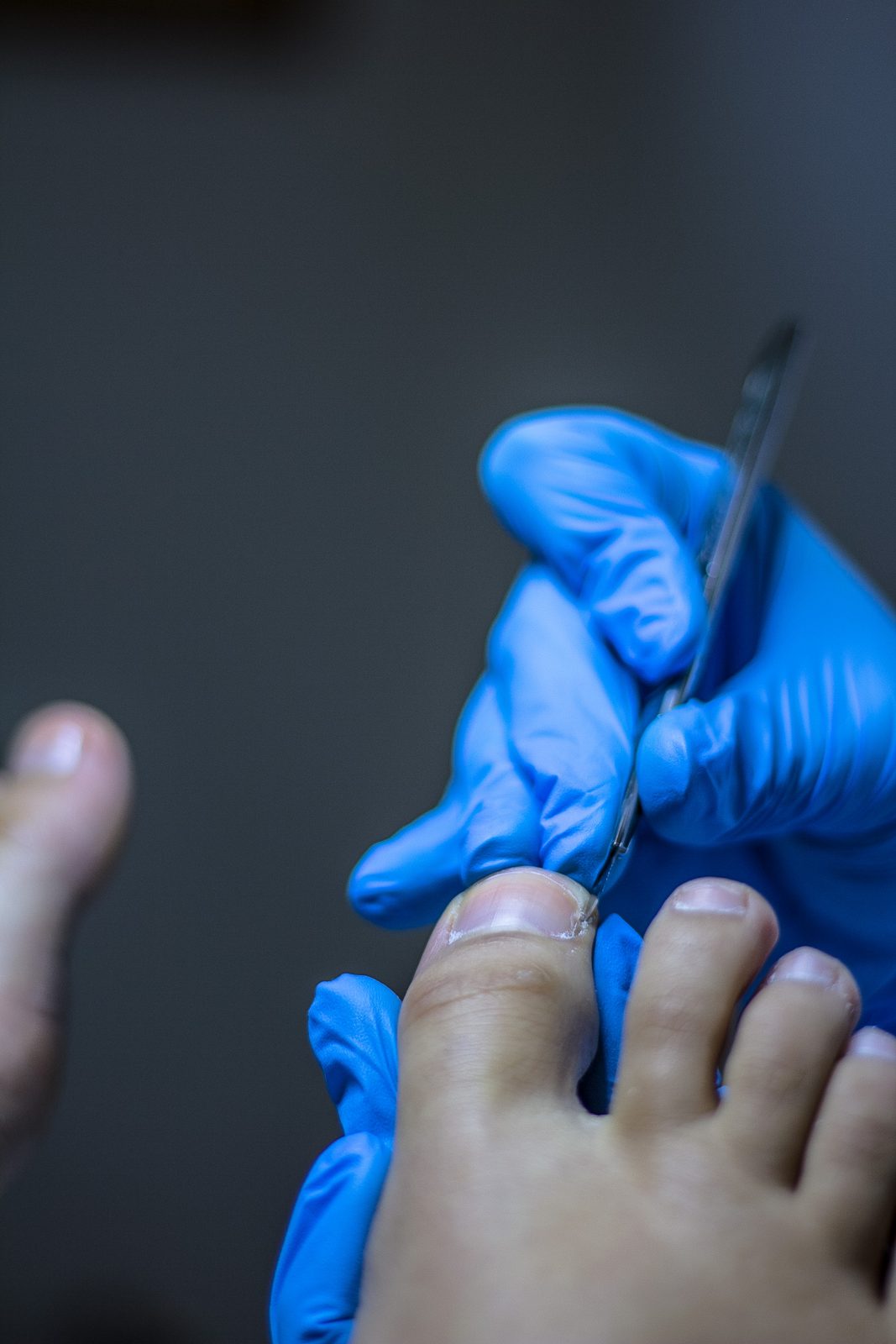
An ingrown toenail occurs when the edge of the nail grows into the surrounding skin. This condition can cause sharp pain, redness, swelling, and sometimes infection. It most commonly affects the big toe but can happen to any toe.
Understanding the causes, symptoms and treatment options is important to manage this condition effectively. This article explains what we see in clinic, what you can do at home, and the treatments we offer at our Reading practice.
What is an ingrown toenail and an involuted nail?
An ingrown toenail (IGTN) happens when the nail edge pierces the skin. This can feel like a sharp splinter and quickly become painful. The affected area often becomes red, swollen and inflamed, and may ooze pus or bleed if infected.
An involuted nail is different. It is a nail that curls inward toward the skin but does not pierce it. Although it is not technically an ingrown toenail, it can still cause pain and redness, and the two are often confused.
Causes of ingrown toenails
- Genetic and structural factors — Gait, the presence of bunions, and naturally curved nails all play a part.
- Incorrect nail cutting — Cutting nails too short or digging into the corners can worsen the problem.
- Tight footwear or socks — These compress the toes and increase pressure on the nail edges.
- Excessive sweating — Moist environments soften the skin, making it easier for the nail to pierce it.
- Fungal nail infections — Thickened or distorted nails are more likely to become ingrown.
How to identify an ingrown toenail
The most common symptom is sharp, stabbing pain along one or both sides of the nail, often with redness and inflammation. However, not all painful nails are ingrown.
Sometimes patients have a curly nail with debris trapped underneath, or a corn or callus beside the nail. A helpful distinction is that ingrown toenail pain is sharp and stabbing, whereas corn pain is more throbbing.
A podiatrist can quickly assess the problem, remove debris or corns, and safely trim the nail. If you are unsure, it is best to have it checked, especially if the pain is increasing.
What you can do before your appointment
- Soak the foot — A warm salty foot bath helps reduce inflammation.
- Dress any discharge — Apply a clean sterile dressing if the toe is weeping.
- Rest your foot — Keep weight off the toe as much as possible.
- Avoid tight footwear — Choose a roomy shoe or open sandal until you are seen.
Conservative treatment
For mild or early-stage ingrown toenails, the painful nail edge is carefully removed, and the area is cleaned and dressed. Local anaesthetic can be used if the toe is very painful.
For involuted nails, the curved section is removed and the nail edges are smoothed. If infection is significant, antibiotics may be prescribed.
Early treatment matters. Untreated infections can spread and become serious, especially for people with diabetes, poor circulation or a weakened immune system.
Nail surgery: the permanent solution
Surgery may be necessary for recurrent ingrown toenails, severe infection, deeply embedded nail edges, or ongoing pain. Both procedures are carried out in clinic under local anaesthetic.
- Partial Nail Avulsion (PNA) with phenol — Only the problematic side of the nail is removed and phenol is applied to prevent that section regrowing. It leaves a slightly narrower nail and has around a 95% success rate when aftercare advice is followed.
- Total Nail Avulsion (TNA) with phenol — For very severe or complex cases, the entire nail plate is removed and phenol prevents regrowth.
Recovery and aftercare
You can walk out of the clinic the same day after surgery. Dressings are required, and follow-up appointments for redressing are important. Most patients return to normal activities quickly, and we provide full aftercare guidance to ensure optimal healing.
When to see a podiatrist urgently
- Signs of infection — Pus, swelling, or spreading redness.
- Higher-risk health conditions — Diabetes, poor circulation, or a weakened immune system.
- Persistent toe pain — Pain that is not settling or is getting worse.
- Reduced sensation — Numbness or other concerning symptoms in the foot.
What to do next
- Book an appointment — Schedule a visit with one of our podiatrists to discuss your symptoms and receive personalised care.
- Contact us — Call 07340 603598 or email info@berkshirepodiatry.co.uk if you have questions before booking.