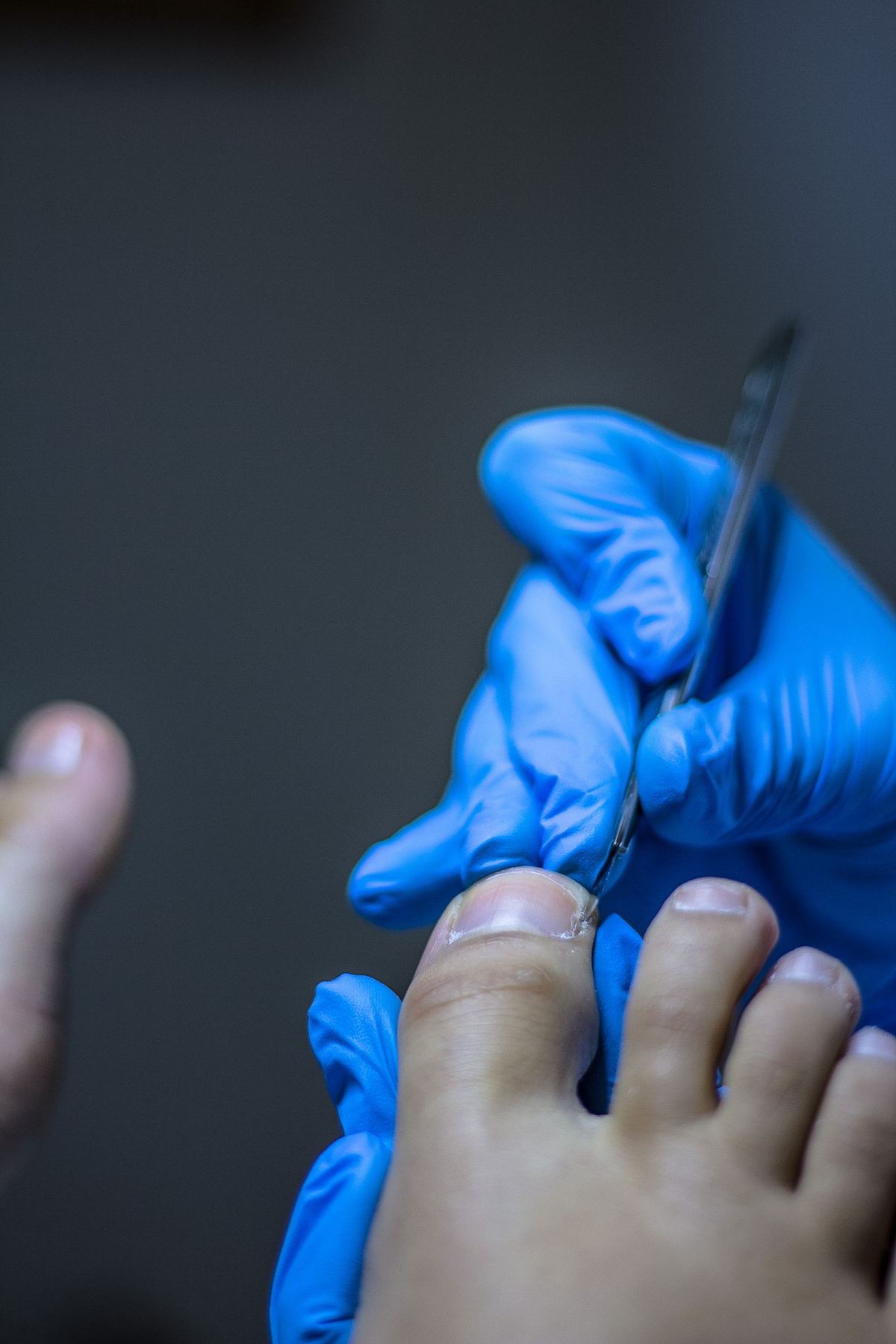
Ingrown toenail or onychocryptosis is one of the most common problems we encounter in our daily practice. This condition occurs when the edge of the toenail penetrates the adjacent skin, usually in the first toe, causing inflammation, infection, and intense pain.
Our podiatrist is dedicated to helping patients alleviate the pain, discomfort, and causes of this condition. Depending on the stage of the ingrown toenail, we offer a range of services, including one-time treatments, routine treatments to promote healthy nail growth, and surgical procedures for more severe cases.
Contact us today to schedule an appointment and start your journey towards healthier toes.
What to expect at your appointment
- 1
We examine the affected toe, assess whether infection is present, and identify the cause — nail shape, cutting technique, footwear pressure or injury.
- 2
Where the nail can be settled conservatively, the offending spike is removed and the nail edge is cleared under local anaesthetic if needed, which usually brings immediate relief.
- 3
For nails that keep recurring, we discuss partial nail avulsion: a minor procedure under local anaesthetic in which the problem edge is removed and treated so it does not grow back.
- 4
You are given a sterile dressing, written aftercare instructions and a follow-up appointment to check healing.
- 5
Appointments are held at our Tilehurst clinic inside The Atrium Health Club, Scours Lane, Reading RG30 6AY, with easy access from Caversham, Purley and central Reading.
Frequently asked questions
Is ingrown toenail treatment painful?
The toe is numbed with local anaesthetic before any procedure, so treatment itself is not painful. Most patients say the relief afterwards far outweighs the discomfort of the injection.
How long is recovery after nail surgery?
Most people return to normal daily activity the next day in a wide, comfortable shoe. Full healing of the nail bed usually takes four to six weeks with regular redressing.
Will the nail grow back?
After a partial nail avulsion with chemical treatment of the nail root, the treated edge is designed not to regrow. The rest of the nail continues to grow normally.
Can I treat an ingrown toenail at home?
Cutting or digging at the nail usually makes it worse and risks infection. Keep the toe clean, wear roomy footwear and have it assessed professionally.