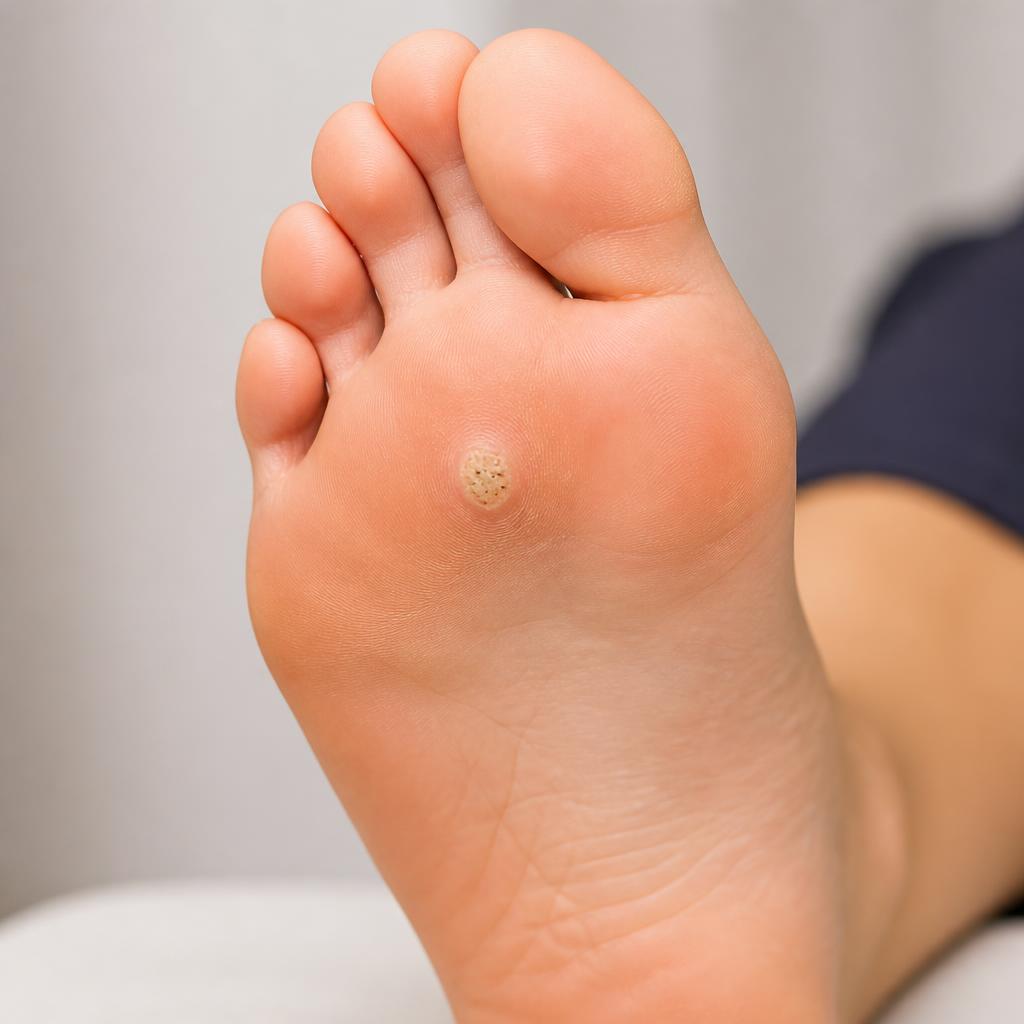
Plantar warts can be a nuisance, but they don't have to be a permanent issue. Verrucas, also known as plantar warts, are small, benign growths on the skin caused by the human papillomavirus (HPV). They often appear on the soles of the feet, causing pain or discomfort while walking or standing.
At Berkshire Podiatry, we offer a variety of treatments to help safely and effectively remove plantar warts, allowing our patients to get back to their daily routine without any discomfort or pain.
Book a consultation with us and let us help you find the best treatment option for your needs.
What to expect at your appointment
- 1
We confirm the diagnosis first — verrucae are commonly mistaken for corns, and the two need completely different treatment.
- 2
The overlying hard skin is gently debrided, which both reduces pressure pain and lets treatment reach the tissue underneath.
- 3
We discuss the treatment options suited to the size, number, site and age of the lesion, and to your circumstances — including whether monitoring is the sensible choice.
- 4
A course is planned with review appointments, because verrucae rarely clear in a single visit, and you are given advice on preventing spread at home, at the pool and in the gym.
- 5
Appointments are held at our Tilehurst clinic inside The Atrium Health Club, Scours Lane, Reading RG30 6AY, with easy access from Caversham, Purley and central Reading.
Frequently asked questions
How do I know it is a verruca and not a corn?
Verrucae usually hurt when squeezed from the sides, interrupt the skin lines, and often show tiny dark dots. A corn is more painful with direct pressure. A podiatrist can tell them apart reliably.
How many treatments will I need?
It varies with the size and age of the verruca. Many need a course of several appointments spaced a few weeks apart, and stubborn lesions can take longer.
Are verrucae contagious?
Yes. The virus spreads through damp communal areas, so cover the lesion when swimming, avoid sharing towels, and do not pick at it.
Will they go away on their own?
Some do, particularly in children, but this can take months or years. Treatment is worthwhile when the verruca is painful, spreading or persistent.