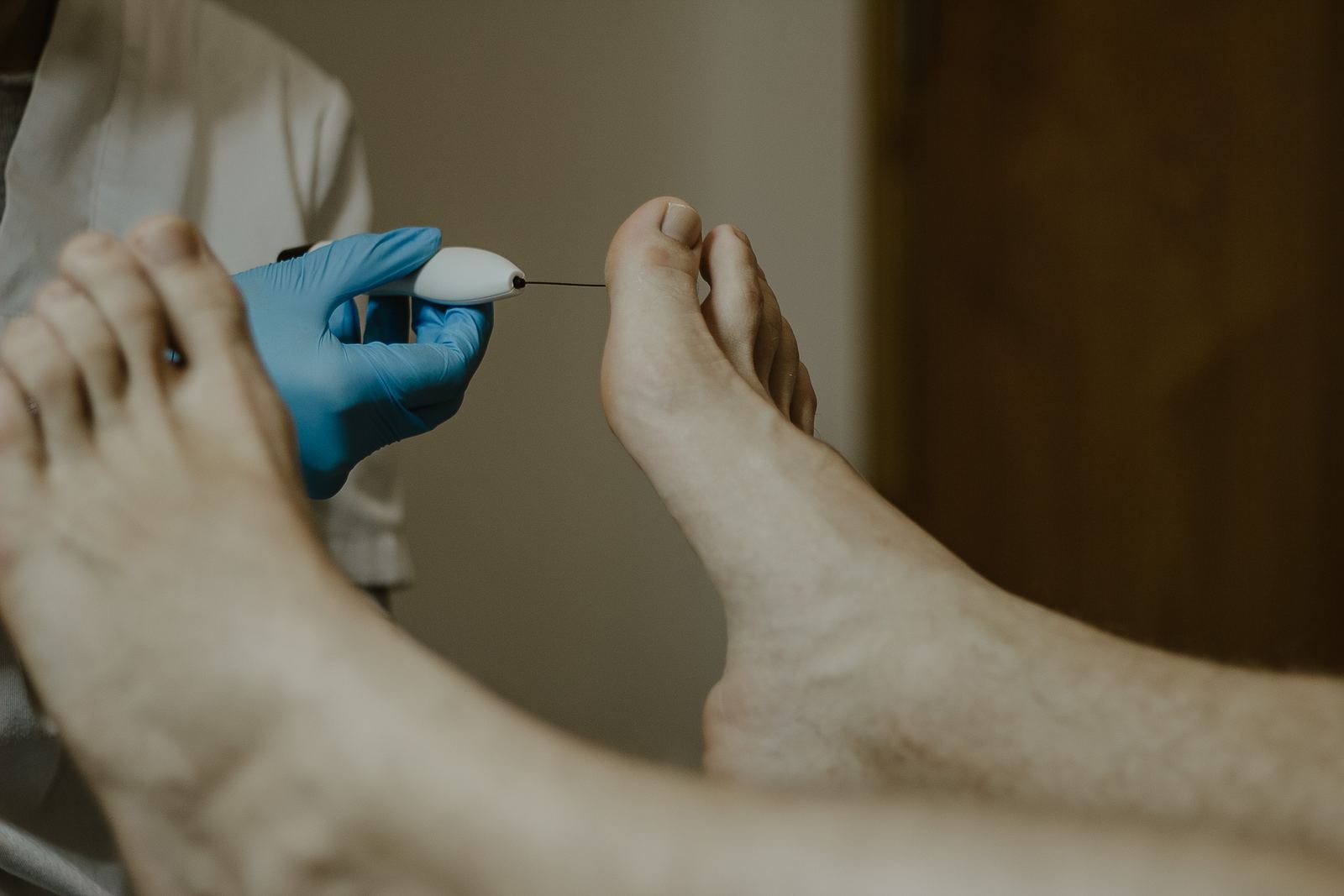
Diabetes has the potential to impact the blood and nerve supply to the feet, resulting in complications. It is imperative for individuals diagnosed with diabetes to undergo an annual diabetic foot assessment.
Our approach involves an evaluation of both blood and nerve supply, leading to the determination of the risk status for your feet. We will give you guidance on the origins and prevention of potential issues, coupled with the management of existing problems, ensuring a proactive and comprehensive care strategy.
Key Components of Our Diabetic Foot Annual Check
- Neurological Assessment — Testing sensation in your feet to detect any loss of feeling, a common complication of diabetes.
- Vascular Assessment — Evaluating blood flow to your feet to identify any circulation problems.
- Skin and Nail Inspection — Checking for cuts, wounds, calluses, corns, or ingrown toenails that could lead to complications.
- Footwear Assessment — Reviewing your footwear to ensure it provides adequate support and protection for your feet.
- Education and Advice — Providing personalised guidance on foot care, including proper hygiene, footwear selection, and early detection of potential issues.
What to expect at your appointment
- 1
Your diabetic foot check begins with a review of your diabetes control, medication, circulation history and any changes you have noticed in your feet.
- 2
We carry out a neurological assessment to test protective sensation, and a vascular assessment to check the blood supply reaching your feet.
- 3
Skin and nails are examined closely for calluses, cracks, wounds, ingrowing nails and fungal infection — the small problems that cause serious complications if left.
- 4
Your footwear is checked for pressure points, and any hard skin or nail problem found is treated during the same visit.
- 5
You are given a clear risk category, written self-care advice, and a recall interval so your feet are monitored at the right frequency.
- 6
Appointments are held at our Tilehurst clinic inside The Atrium Health Club, Scours Lane, Reading RG30 6AY, with easy access from Caversham, Purley and central Reading.
Frequently asked questions
How often should someone with diabetes have a foot check?
At least once a year for low-risk feet, and more frequently — often every three to six months — if you have reduced sensation, poor circulation or a history of ulceration.
Does the assessment hurt?
No. Sensation and circulation testing are painless, and any nail or hard skin treatment is carried out gently with sterile instruments.
Why does diabetes affect the feet?
Raised blood glucose over time can damage nerves and narrow blood vessels. That reduces feeling and slows healing, so a minor injury can go unnoticed and become serious.
What warning signs should I act on?
Any new wound, blister, colour change, swelling, unusual warmth or discharge should be checked urgently rather than waiting for your next routine appointment.