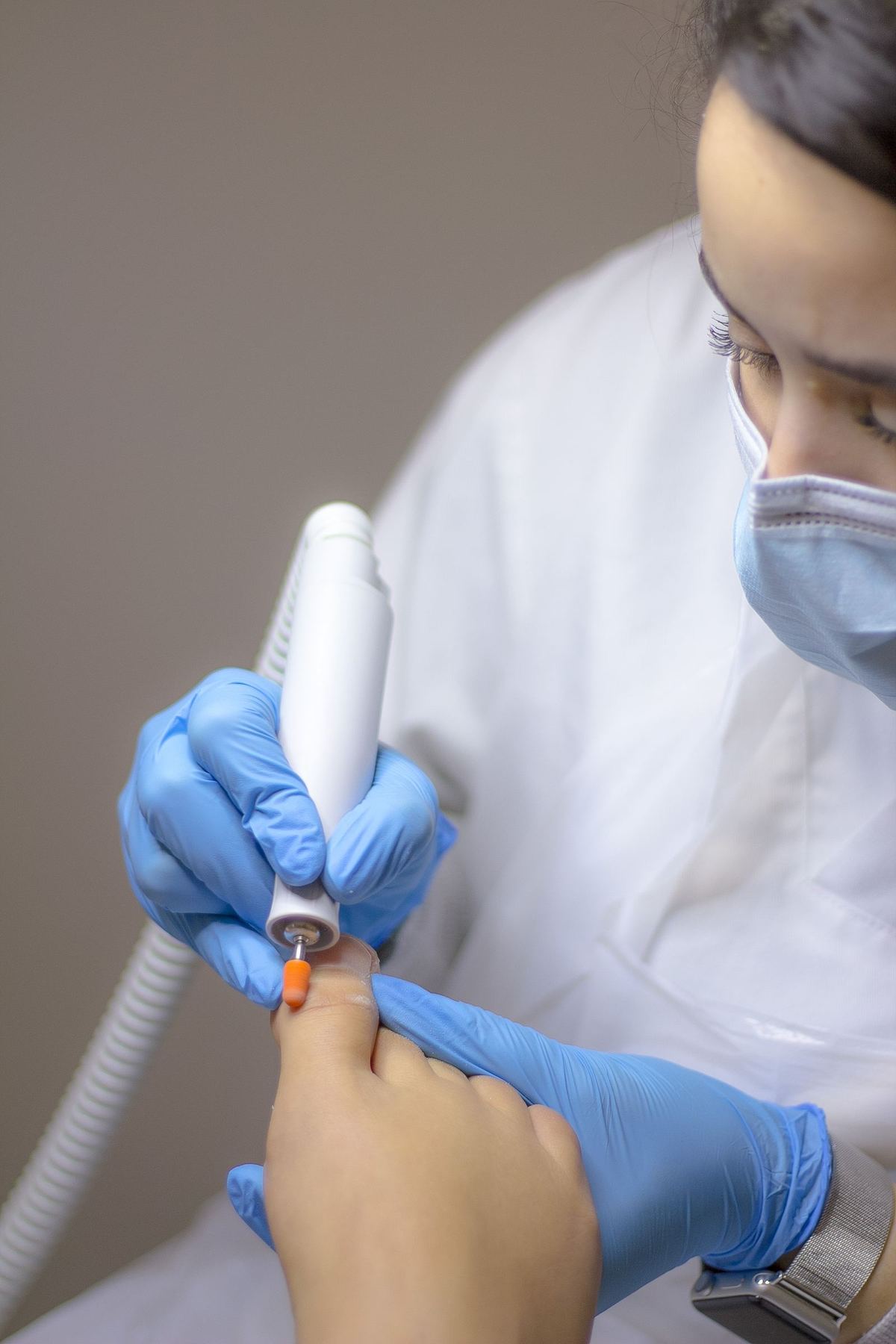
Corns are small, hardened areas of skin that typically develop on the toes or sides of the feet, often as a result of friction or pressure. Calluses are larger areas of thickened skin that commonly form on the soles of the feet.
Treatment Options Include
- Debridement — Safely removing excess layers of thickened skin using specialised tools.
- Padding and Offloading — Applying protective padding to reduce friction and pressure on affected areas.
- Custom Orthotics — Designing custom-made orthotic inserts to redistribute pressure and alleviate discomfort.
- Footwear Advice — Providing guidance on proper footwear selection to minimise friction and pressure on corns and calluses.
- Moisturising Therapies — Recommending moisturising creams or lotions to soften hardened skin and prevent recurrence.
Don't let callouses, corns, or cracked heels slow you down. We understand how these conditions can negatively impact your mobility and overall quality of life. That's why we offer top-notch care to help you alleviate your symptoms and get back on your feet in no time.
What to expect at your appointment
- 1
We look at where your hard skin has formed, because the pattern tells us which part of your foot is taking too much pressure and why.
- 2
The callus or corn is removed painlessly with a sterile scalpel and burr — most patients feel immediate relief when the pressure point is taken away.
- 3
We then treat the cause rather than just the symptom: padding, footwear changes, or orthotic redistribution of load so the hard skin is slower to return.
- 4
Dry, cracked heels are debrided and treated with an emollient regime you can continue at home.
- 5
Where the cause cannot be fully removed, we agree a maintenance interval — usually every six to twelve weeks — to keep you comfortable.
- 6
Appointments are held at our Tilehurst clinic inside The Atrium Health Club, Scours Lane, Reading RG30 6AY, with easy access from Caversham, Purley and central Reading.
Frequently asked questions
Does corn and callus removal hurt?
No. The hard skin has no nerve supply, so it is removed painlessly. Most patients describe walking out feeling noticeably lighter on the foot.
Why do my corns keep coming back?
Because the pressure that caused them is still there. Lasting improvement usually needs footwear changes, padding or orthotics alongside the removal.
Can I use corn plasters from the chemist?
Medicated corn plasters contain acid that can burn healthy skin, and they are unsuitable if you have diabetes or poor circulation. Professional removal is safer and more effective.
How often should I be seen?
Most patients with recurring hard skin are comfortable on a six to twelve week routine, adjusted to how quickly your skin builds up.