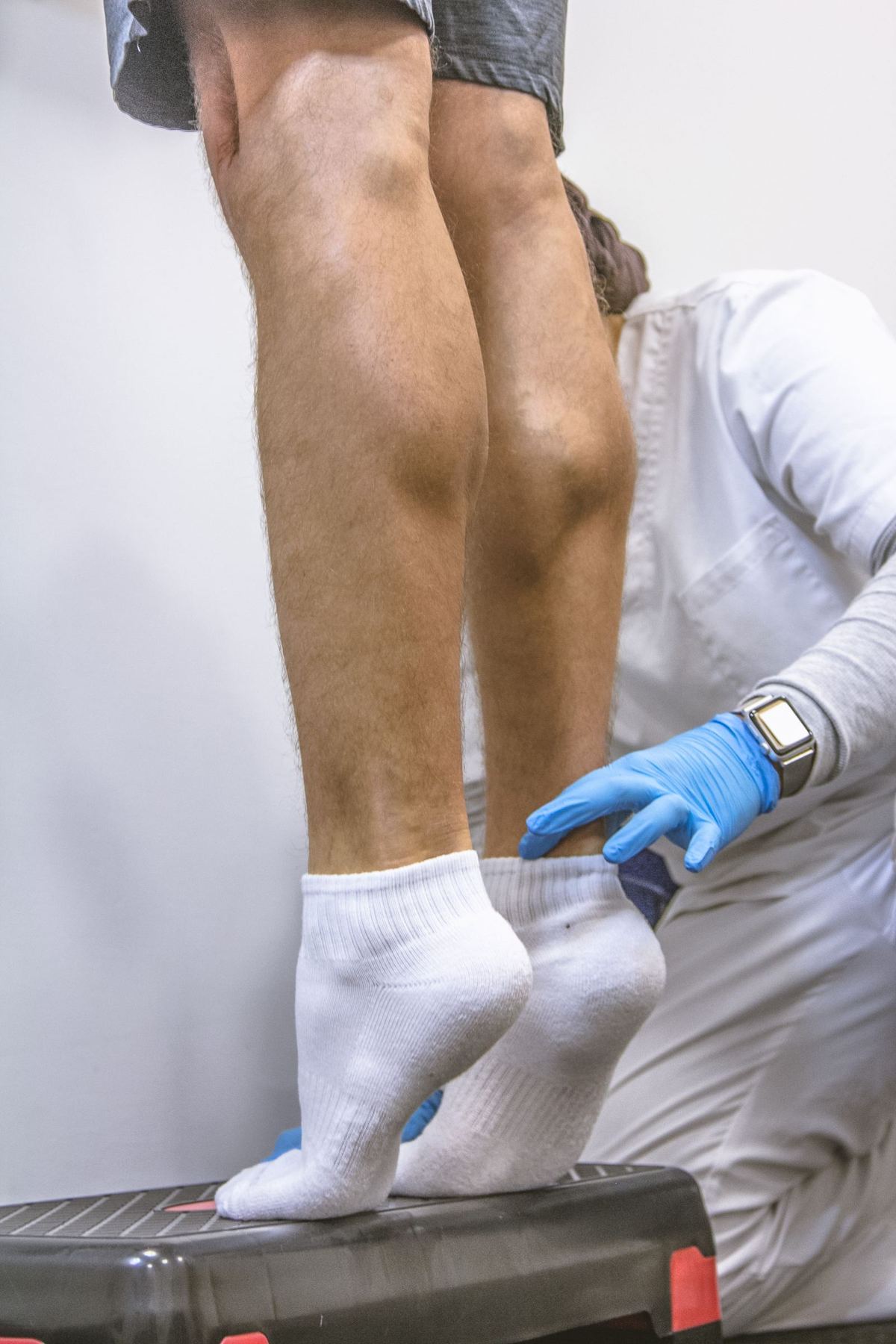
A biomechanical assessment helps us analyse how your foot interacts with your ankle, knees, hips, and spine. Whether you're an athlete or someone experiencing foot pain, we can help you.
We tailor our treatments depending on your unique situation, so you can rest assured that you're getting the exact care you need to live an active and pain-free life.
Key Components of Our Biomechanical Assessment
- Gait Analysis — Observing how you walk or run to identify any abnormalities in your stride or foot placement.
- Foot Structure Examination — Assessing the alignment, arches, and overall structure of your feet to identify potential issues.
- Range of Motion Testing — Evaluating the flexibility and mobility of your joints to detect any limitations or restrictions.
- Muscle Strength Assessment — Testing the strength and function of key muscles in the feet and lower limbs.
What to expect at your appointment
- 1
We begin with a conversation about your symptoms, your medical history, your footwear and the activities that bring your pain on — running, standing at work, or simply walking the dog.
- 2
You are then assessed both standing and walking. We look at joint range of motion, muscle strength, foot posture and how your weight transfers through each step, using video gait analysis where it helps to slow the movement down.
- 3
Findings are explained to you in plain language, with the link between what we measured and the pain you feel made clear before anything is recommended.
- 4
You leave with a written management plan. That may include a home rehabilitation programme, footwear changes, activity modification, or custom-made orthotics if the assessment shows they would help.
- 5
Appointments are held at our Tilehurst clinic inside The Atrium Health Club, Scours Lane, Reading RG30 6AY, with easy access from Caversham, Purley and central Reading.
Frequently asked questions
How long does a biomechanical assessment take?
Allow around 45 to 60 minutes. This gives time for a full history, standing and walking assessment, and a proper explanation of the findings and treatment plan.
What should I bring or wear?
Wear or bring shorts, and bring the shoes you wear most often plus any sports footwear. Worn soles tell us a great deal about how you load your feet.
Will I definitely need orthotics?
No. Orthotics are only recommended when the assessment shows your symptoms are driven by how your foot loads. Many patients improve with strengthening, footwear changes and activity advice alone.
Do I need a GP referral?
No referral is needed. You can book directly with our HCPC-registered podiatrist online or by phone.